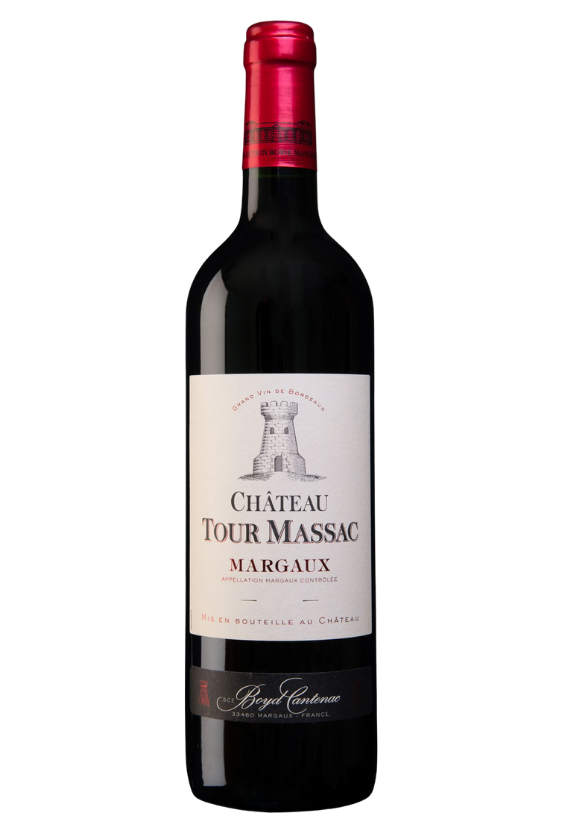

1.683.000 ₫

781.000 ₫

561.000 ₫

495.000 ₫

528.000 ₫

462.000 ₫

759.000 ₫
Merlot is a red wine grape variety with strong historic ties to Bordeaux and the southwest of France. It is the predominant variety in most wines from Saint-Émilion and Pomerol, the area in which the variety originated. Merlot is now widely planted in wine regions across the world and, in terms of the volumes of wine produced internationally, it is rivaled only by its Bordeaux companion, Cabernet Sauvignon.
Merlot is an early maturing grape variety and can ripen fully even in slightly cooler climates. This reliable ripening is a main factor behind its increased presence over recent decades in the Médoc and (mostly replacing white varieties) Entre-Deux-Mers areas of Bordeaux. Its key drawback is that the early-developing flowers are more susceptible to frost damage in spring.
In France, Merlot is the most widely planted red wine variety of all, and it is also extremely popular in northern Italy and the warmer areas of southern Switzerland. The popularity of Merlot in the United States resulted in a significant increase in planting in the late 1980s and early 1990s, particularly in California and Washington on the country’s west coast. However, while Merlot-based wines were the height of fashion then, popularity has since dropped significantly in favor of Cabernet Sauvignon, Zinfandel, and Pinot Noir in particular.
Chile, a country which has long been known as a source of good-value wine, has built its reputation mainly on its Merlot-based cuvées. The country has made good use of Merlot in both the high-production wines and some of its finer wines, particularly those from Apalta and the wider Colchagua Valley.
The precise flavors that Merlot imparts to a wine are not easily grouped. Plum and black cherry are among the most common fruit-based descriptors used, though it is often used for producing wines of a particular texture, rather than a particular taste.
Smooth, rounded and “easy drinking” are common descriptions of Merlot wines. The main reason for this is that Merlot grapes are relatively large in relation to their pips and the thickness of the skins, in which tannins are found. For this reason, the variety is used to soften wines made from more tannic varieties. Chief among these is Cabernet Sauvignon, Merlot’s main blending partner in the Médoc and in wine regions around the world (see Cabernet – Merlot for more information on this blend). Other southwest French varieties like Tannat (in Cotes de Gascogne) and Malbec (in Cahors) and the less common Petit Verdot benefit from Merlot’s calming presence. In Tuscany it can be combined with the more angular Sangiovese.
Merlot is often dismissed as a reliable blending variety. It is often used to great effect in this capacity, and is responsible (alongside Cabernet Sauvignon) for some of the most famous wines in the world. However, it is also widely used to make varietal wines at all quality tiers, mostly in the New World. The most famous varietal Merlot wine is undoubtedly Petrus from the Pomerol region of Bordeaux – a highly collectable wine that can fetch several thousand dollars, depending on its vintage.
Investigations into the genetics of Merlot suggest that it is closely related to Cabernet Franc and Cabernet Sauvignon, its Bordeaux blending partners. Carmenère, a historic member of the extended Bordeaux family is also a close relative, and has been mistaken as Merlot for many years in the vineyards of Chile. Worthy of mention here is “Caberlot”, reportedly a crossing of Merlot and another variety (possibly one of the Cabernets, hence the name), discovered by Italian agronomist Remigio Bordini. This almost mythical grape variety exists only in a small vineyard in Tuscany, where it is used to make Il Carniscale’s varietally labeled Il Caberlot wine.
Food matches for Merlot include:
Head office: 781 Hong Ha, Chuong Duong Do, Hoan Kiem, Hanoi
[email protected] – 1900 636 749 – (+84-24)38 262 076
ERC: 0100598866
Issued on: 28/11/1995 Licensed by the Minister of Planning and Investment
Distribution license: No. 429/GP-BCT issued by the Ministry of Industry and Trade on 21/08/2023

Comply with Decree No. 185/2013/ND-CP of the Government and Advertising Law No. 16/2012/QH13 on online sales.
Comply with Decree No. 24/2020/ND-CP of the Government: do not sell alcohol to people under 18 years old.
Comply with Article 16 of the Law on Prevention and Control of Harmful Effects of Alcohol and Beer No. 44/2019/QH14 issued by the National Assembly
The content on the website is for product introduction purposes only. We do not sell online!
Product is not intended for use by persons under 18 years of age or by pregnant women | Sitemap